Why Trilingual Children Aren't "Confused" — What the Research Actually Says



It's one of the most persistent myths in early childhood: that children exposed to more than one language will become confused, fall behind, or develop language late.
Decades of research now show the opposite. Multilingual children may take a different path through early language development, but they don't take a slower one. And the long-term advantages are substantial.
Where the myth came from
The "language delay" idea dates back to early twentieth-century studies that compared bilingual immigrant children to monolingual peers, often using tests in only one language. The findings looked alarming. The methodology was flawed.
When researchers began testing multilingual children in all their languages, the picture changed completely. A child whose vocabulary is split across English, Arabic, and French may know fewer words in each language individually, but their total conceptual vocabulary equals, or exceeds, a monolingual peer's.
What multilingual children actually do
Young trilinguals often:
- Mix languages within a single sentence (this is code-switching, not confusion)
- Have a "dominant" language that shifts over time depending on environment
- Develop strong listening comprehension before strong production
- Use one language with one parent or context, and another with the next
None of this signals delay. All of it signals a brain doing sophisticated work, tracking which language belongs to which person, place, or moment.
The cognitive advantage
Research led by Ellen Bialystok at York University has consistently shown that multilingual children develop stronger executive function: the ability to focus, switch tasks, and ignore irrelevant information.
The reason is mechanical: every time a multilingual child speaks, their brain is suppressing the languages they're notusing. That suppression is mental exercise, repeated thousands of times a day. The result is a more flexible, attentive mind.
What this means in Dubai
Dubai is one of the most naturally trilingual cities in the world. Children grow up hearing English at school, Arabic in cultural and family life, and often a third language at home.
This is an advantage to lean into, not a complication to manage. The most useful things parents can do are:
- Be consistent, not perfect. "One parent / one language" helps but isn't essential.
- Read aloud in every language the child hears.
- Trust the silence. Many trilingual children speak later, then catch up rapidly.
- Don't translate constantly. Let the child sit in each language's rhythm.
When to seek advice
True language delay shows up across all of a child's languages, not just one. If a child isn't pointing, making eye contact, or trying to communicate by eighteen months in any language, that's worth discussing with a paediatrician, not because they're multilingual, but because the signal is consistent.
For everyone else: keep going. The brain is doing exactly what it's built to do.
At The Ivy, English, Arabic, and French are part of daily life, not isolated lessons. Children grow up hearing each language used meaningfully, by educators who model the calm, consistent exposure the research recommends.
Related Articles
The educator Loris Malaguzzi, who founded the Reggio Emilia approach in post-war Italy, wrote a poem that has become quietly famous in early childhood education circles. It begins:
"The child has a hundred languages... a hundred ways of thinking, of playing, of speaking."
On the surface, it is lyrical. Beneath it is a serious educational philosophy, one that has shaped how the best early-years settings around the world think about teaching young children.
What "a hundred languages" really means
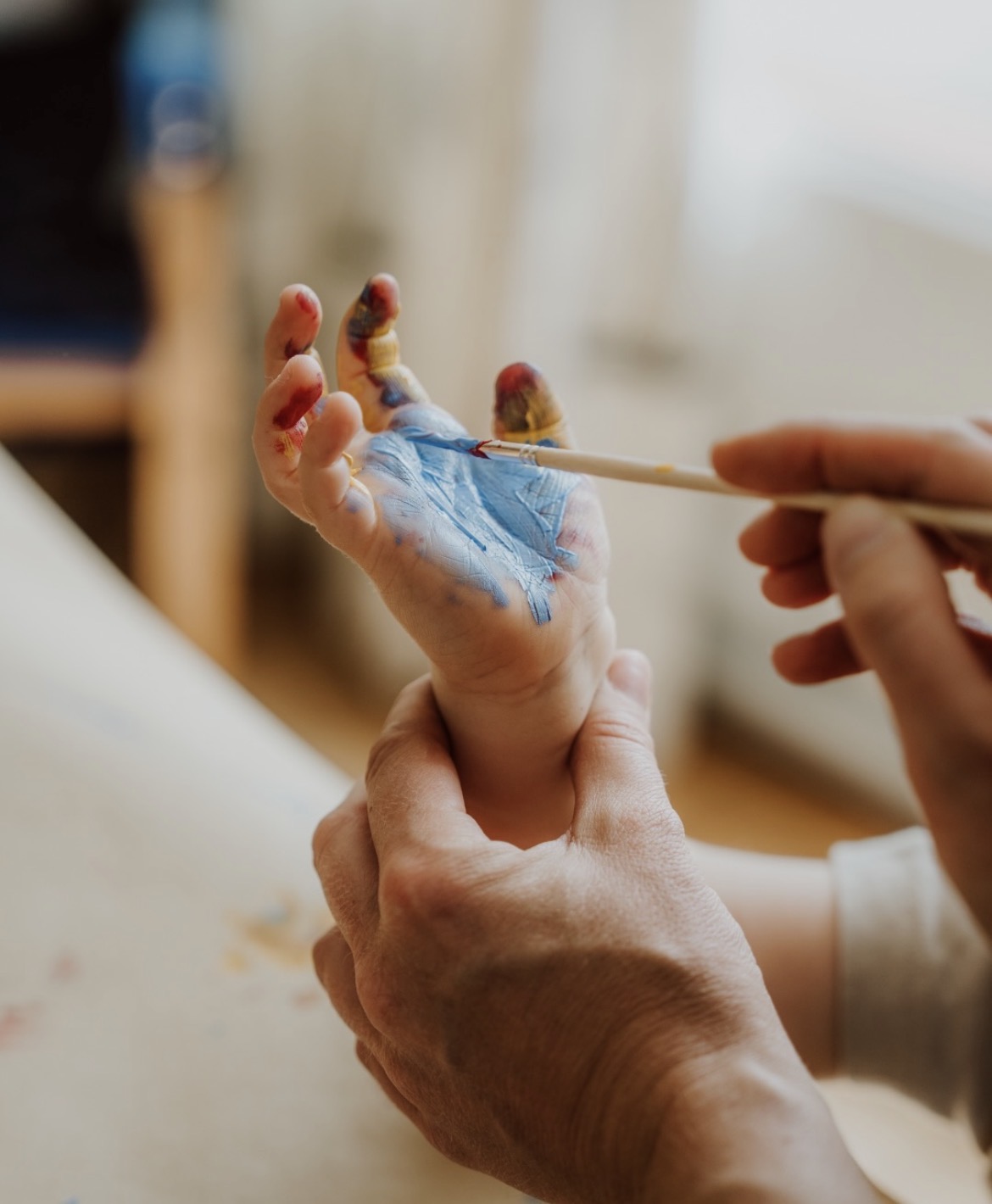
Malaguzzi's point was that a young child expresses thought in far more ways than we usually recognise. A drawing is a language. So is a block tower. So is dance, mud, silence, repetition, questions, song, the way a child rearranges objects on a shelf.
When we assume that a child's "real" voice is the spoken one, we miss most of what they are telling us.
The Reggio approach asks educators to take all of these languages seriously, not as cute byproducts of childhood, but as legitimate forms of thinking, observation, and meaning-making.
Why listening is the harder skill
Most adults instinctively teach young children. We name, correct, instruct, model, ask leading questions.
Reggio educators are trained to do something harder: to listen. Not just to words, but to gestures, choices, repetitions, hesitations. The educator's job becomes less about delivering content and more about noticing what a child is already trying to understand, and providing the materials, time, and questions that take that understanding further.
This is a quieter kind of expertise. It looks, from the outside, like very little is happening. In fact, the work is enormous.
The environment as third teacher
Reggio classrooms are designed with extraordinary care. Light, natural materials, low shelves with carefully chosen objects, mirrors, plants, things to take apart and put together. The environment itself is meant to provoke wondering.
Reggio educators speak of three teachers: the parent, the educator, and the environment. When all three are aligned, children do not need to be motivated. They are already curious. The environment simply makes the curiosity easier to follow.
What this looks like at home
You don't need a Reggio classroom to bring this thinking home. You need three small shifts:
- Slow down. Resist the urge to narrate every moment. Watch first.
- Believe what you see. When a child is deeply absorbed in something, even something small, even something messy. That is real thinking. Don't interrupt it for "learning time."
- Document. Take photos, keep drawings, write down the surprising sentences. When children see their thinking taken seriously, they think more deeply.
A different idea of education
The Reggio approach is not a curriculum. It is a stance, a way of seeing the child as competent, capable, and full of theories about the world from the very beginning.
In a culture that often hurries children toward outputs, it is a quiet reminder that the most important early-years work is invisible, slow, and deeply respectful.
At The Ivy, our environments draw inspiration from the Reggio tradition while our curriculum is grounded in the rigour of the Massachusetts Early Learning Framework, bringing together both warmth and measurability, both beauty and outcomes.
There's pressure now — earlier than ever — for young children to start "doing things." Reading by three. Sight words by four. Maths workbooks before kindergarten. The implication: play is what children do when they're not yet ready to learn.
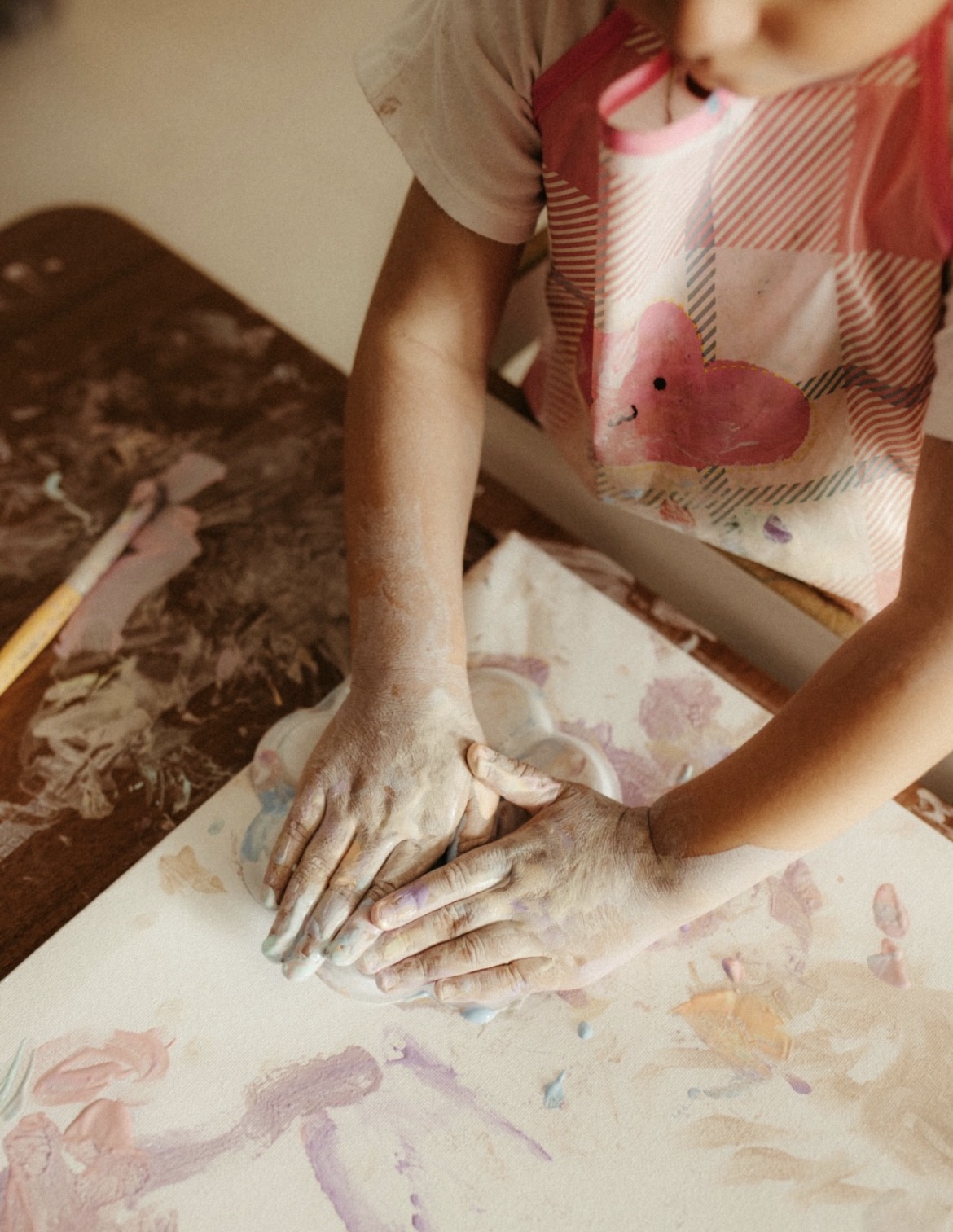
The research says the opposite. Play is the learning. And cutting it short, the evidence suggests, doesn't accelerate development. It interrupts it.
What play actually does
When a four-year-old builds an elaborate game with cushions and a dragon — assigning roles, negotiating rules, holding a story in their head while improvising the next twist — they are doing something neurologically extraordinary.
They are practising:
- Executive function (planning, sequencing, holding multiple things in mind)
- Self-regulation (waiting their turn, managing frustration when the tower falls)
- Theory of mind (understanding what the other child believes, wants, expects)
- Symbolic thinking (a cushion is a mountain, a stick is a sword)
- Language (negotiating, narrating, persuading)
No worksheet trains all of these at once. Play does, every day, for hours.
The research consensus
In 2018, the American Academy of Pediatrics published a clinical report concluding that play is "essential" to brain development — not optional, not supplementary, but central. Researchers at Harvard's Center on the Developing Child have made a similar case: executive function, the strongest single predictor of long-term academic success, is built through play far more efficiently than through instruction.
In other words: the children who play more deeply at four often outperform their peers academically by eight — not in spite of the play, but because of it.
What "good" play looks like
Not all play is equal. The richest play is:
- Child-led — the adult follows, doesn't direct
- Open-ended — no single right answer or outcome
- Unhurried — long enough for an idea to develop, fail, restart
- Mixed in form — pretend, building, movement, story
- Slightly boring at the start — boredom is the doorway to imagination
This is why over-scheduling can quietly undermine the very development it's meant to support. A child shuttled between five enrichment classes a week has less time for the kind of slow, self-directed play that builds the deepest skills.
The role of the environment
A good early-years environment isn't a classroom full of toys. It's a space carefully designed to invite curiosity — natural materials, open shelving, things that can become other things. The Italian Reggio Emilia tradition calls the environment "the third teacher" for exactly this reason: a well-designed room teaches without instructing.
What parents can do
The simplest answer is often the hardest:
- Do less. Resist the urge to fill every moment.
- Buy fewer toys. Children play more deeply with fewer, simpler things.
- Stay nearby, but stay out. Presence matters; direction usually doesn't.
- Let them be bored. It's not a parenting failure. It's a beginning.
At The Ivy, our classrooms are designed for the kind of long, child-led play the research keeps confirming we need more of — not less.
It slips out automatically. A child finishes a drawing, builds a tower, manages to put on their shoes. We say it without thinking: "Good job!" "You're so smart!" "Well done!"
The instinct is loving. The effect, decades of research now suggest, is more complicated than we realised.
The work behind the idea
Stanford psychologist Carol Dweck spent years studying how children respond to different kinds of praise. In one well-known study, fifth-graders were given a puzzle to solve. Half were praised for being smart. Half were praised for working hard.
When offered a harder puzzle next, the children praised for effort chose the challenge. The children praised for intelligence chose the easier task. They had learned, in a single sentence of praise, that being smart was something to protect, and protecting it meant avoiding risk.
This finding has been replicated many times, across many ages. The pattern is consistent: person praise ("you're smart," "you're talented," "you're a good girl") makes children fragile. Process praise ("you tried different ways," "you didn't give up," "you really concentrated") makes children resilient.
Why it matters early
Parents often assume this only applies to older children. The research suggests it begins much earlier, by age three or four, children are already forming beliefs about whether ability is fixed or grown.
A child who hears "you're so clever" enough times learns that cleverness is a label. A child who hears "you kept trying even when it was hard" learns that effort is the engine.
What process praise sounds like
The shift is small but powerful:
- Instead of "good job" → "you stuck with that for a long time"
- Instead of "you're so smart" → "you thought of a new way to try it"
- Instead of "beautiful drawing" → "you used so many colours. Tell me about it"
- Instead of "you're such a good helper" → "you noticed I needed help and came over"
Notice what each one does: it describes what the child did, not what they are. It opens a conversation rather than closing one. It gives the child information they can use again.
What to do when they fail
Process praise also reshapes how children meet difficulty. When a child struggles, the most useful adult response is often not reassurance, it's curiosity.
"That was tricky. What do you think happened?" tells a child their effort is interesting, and that failure is information rather than identity.
This is the foundation of what psychologists call a growth mindset, the belief that ability develops through effort, strategy, and time. Children who hold it persist longer, recover faster, and take on harder things.
At The Ivy, educators are trained to notice and name the process of a child's thinking, not just the result. It's a small shift in language with an outsized effect on how children come to see themselves as learners.
Ready to meet us?
We'd love to meet you.
Register your interest to join our waitlist.